Artemisia Gentileschi in Florence: the exhibition and masterpieces to discover in the city
Fri, 11/20/2026 - 15:06
In 1616, Artemisia Gentileschi became the first woman admitted to the Academy of the Arts of Drawing in Florence. She was in her early twenties and had a difficult personal history behind her, yet she had already managed to win the trust of the Medici court and some of the leading intellectuals of the time.
That recognition marked a turning point in her career. Artemisia was building her identity as a painter in a world where women faced enormous obstacles to professional success. Florence played a decisive role in this journey, and today, that story is being retold through the exhibition Artemisia Gentileschi in Florence, hosted at the Museo degli Innocenti from October 20, 2026, to April 4, 2027.
The exhibition invites visitors to discover one of the most fascinating figures of seventeenth-century painting, tracing her artistic evolution and her relationship with a city that contributed to her rise to fame.
Artemisia Gentileschi in Florence: the years that changed her career
When she arrived in Florence in 1613, Artemisia had already experienced the complexities of being a young woman aspiring to make a living from her art. Born in Rome in 1593, she learned to paint in the workshop of her father, Orazio Gentileschi, soon coming into contact with the naturalism of Caravaggio, who would profoundly influence her work.In 1612, she faced a trial against Agostino Tassi, the painter who had raped her. It was a painful ordeal, made even more difficult by public exposure and the violence she endured during interrogations. Her move to Florence, following her marriage to Pierantonio Stiattesi, marked the beginning of a crucial phase in her life.
The city of the Medici offered opportunities to those who could gain appreciation for their talent. Artemisia connected with the grand ducal court circle, spent time with Galileo Galilei, and formed ties with Michelangelo Buonarroti the Younger, great-nephew of the famous artist. It was the latter who entrusted her with one of her most important commissions of the period: the Allegory of Inclination, intended for the Casa Buonarroti Gallery.
In Florence, her name began to circulate among the most influential patrons. The commissions she received and her admission to the Academy of the Arts of Drawing in 1616 are a testament to the position she had managed to achieve. This was by no means a given for a woman in seventeenth-century society, where the artistic profession was still largely male-dominated.
Artemisia nevertheless had to face financial and family difficulties. Her journey was also marked by the need to secure proper recognition for her work, a struggle that emerges from her correspondence and documents of the time.
When she left Florence in 1620, she had consolidated a reputation that would later allow her to work in Rome, Naples, and London. Her talent had found an environment in the Tuscan city where she could grow and engage with some of the greatest artists of her time.
The exhibition at the Museo degli Innocenti: what to see and why visit
Artemisia Gentileschi’s story has often been told through the lens of the violence she suffered and the hardships she faced. These events undoubtedly weighed heavily on her life, but they alone cannot explain the greatness of her painting.The exhibition at the Museo degli Innocenti allows visitors to discover Artemisia through the work she dedicated her entire life to, from her early days in her father's workshop to the artistic maturity she reached between Naples and London. At the heart of the itinerary emerges a woman who was able to build an international career, winning the trust of prestigious patrons and developing a highly personal visual language.
One of the most recognizable aspects of her painting is her portrayal of women. In Artemisia’s works, biblical and mythological heroines take on a particularly intense presence. Judith, Cleopatra, Susanna, and Mary Magdalene are figures who face difficult situations, make choices, and experience emotions that the painter manages to make immediately tangible.
Artemisia was well acquainted with the subjects painted by her contemporaries, but she interpreted them with a distinct sensitivity. Her protagonists possess a strong individuality; they express determination and sometimes reveal a vulnerability that makes them profoundly human. The painter succeeds in drawing the observer in, bringing them close to the characters' lived experiences.
This characteristic runs through her entire body of work, making it fascinating to discover even her lesser-known pieces, moving beyond the iconic images that made her famous.
The exhibition helps visitors understand how this artistic vision matured. The comparison with Caravaggio, featured in the exhibition, highlights the influences of her Roman training and how Artemisia reinterpreted them. Meanwhile, the works of artists active in seventeenth-century Florence, including Cristofano Allori, recreate the cultural environment where she found new inspiration and opportunities.
Among the paintings on display, the Allegory of Inclination stands out. Created for Michelangelo Buonarroti the Younger between 1615 and 1616, the artwork, normally housed at Casa Buonarroti, is exceptionally presented at the Museo degli Innocenti following its restoration. Its presence offers a rare chance to admire up close one of the most significant testaments to Artemisia's professional success in Florence.
Featuring over fifty works from Italian and international collections, the exhibition reconstructs an artistic journey that is much broader than her most famous paintings might suggest. It offers a unique opportunity to encounter this immense artist within the context where she worked, observing how her style evolved over the years.
The visit also takes place in one of the most representative landmarks of Florentine history: the Museo degli Innocenti, located in the historic complex designed by Filippo Brunelleschi in Piazza della Santissima Annunziata. The exhibition ticket also grants access to the museum's permanent collection.
From the Uffizi to Palazzo Pitti: In the Footsteps of Artemisia in Florence
The relationship between Artemisia and Florence extends well beyond the halls of the Museo degli Innocenti. The city's collections house works that showcase the variety of her output and provide insight into some of the most personal aspects of her painting.At the Uffizi Galleries, you can find Judith Beheading Holofernes, one of the artist's most celebrated masterpieces. Painted around 1620 and intended for Grand Duke Cosimo II de' Medici, the artwork has become an emblematic representation of her ability to depict determined female figures taking charge of their own destinies.
Artemisia’s Judith has often been interpreted in light of her personal experiences. However, the true value of the painting lies primarily in the artist's ability to transform a biblical episode - one already tackled by numerous painters - into a scene of extraordinary intensity. Through her brush, Artemisia managed to give a unique and recognizable voice to characters who had belonged to artistic tradition for centuries, pushing back against the harsh reactions of those at the time who were unable to grasp the hidden truths within those works.
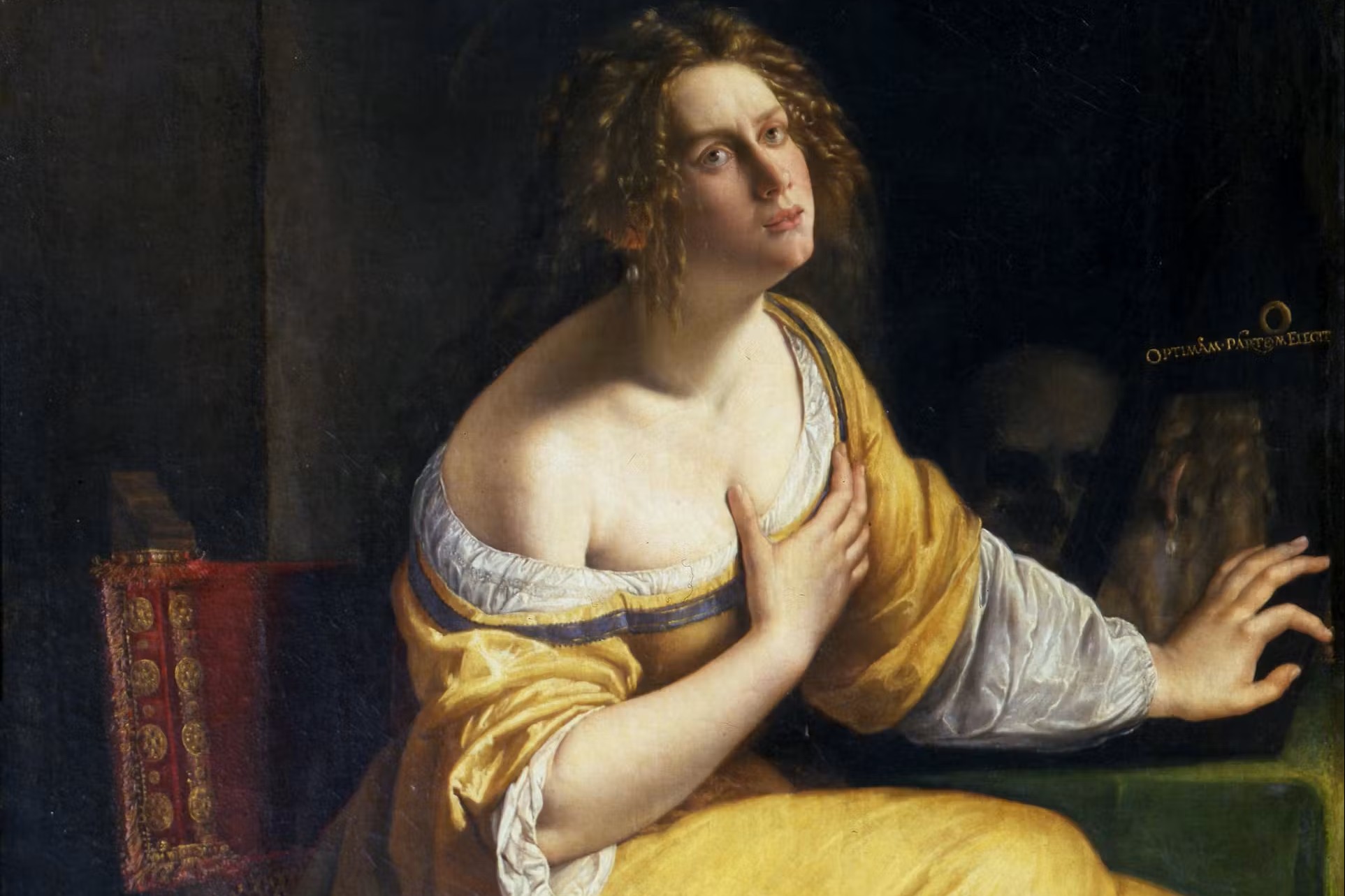
At Palazzo Pitti, within the collections of the Palatine Gallery, the journey continues with paintings like St. Mary Magdalene and Judith and Her Maidservant, two works that reveal an Artemisia capable of approaching the psychological depth of her characters with great sensitivity.
The Magdalene, for example, captures a moment of personal transformation, while Judith and Her Maidservant revisits a heroine who accompanied Artemisia through various stages of her career. Her interpretations of these subjects reveal a careful attention to the complexity of the female experience, conveyed through emotions and behaviors that remain strikingly relevant today.
Another key location tied to her story is Casa Buonarroti, where Artemisia worked on a prestigious commission for Michelangelo’s family. Visiting the palazzo’s Gallery, even during the temporary transfer of the Inclination to the Innocenti, helps visitors grasp the importance of that assignment and the artistic context in which the young painter was making a name for herself.
Following in Artemisia’s footsteps in Florence also means rediscovering the city's role in her career. The works preserved in its museums stand as a testament to her ties with Medicean patrons and a cultural milieu that fostered the maturation of her style. The exhibition adds a broader perspective to this journey, allowing visitors to know the woman and the artist through the different seasons of her life.
With the FirenzeCard, it is possible to visit the Uffizi, Palazzo Pitti, and Casa Buonarroti, according to the access conditions set by the circuit. Cardholders can also purchase a reduced ticket for €14 for the Artemisia Gentileschi in Florence exhibition directly at the Museo degli Innocenti ticket office, gaining entry at the first available time slot.
It is an opportunity to dedicate more time to an artist who left an indelible mark on the history of painting and to discover Florence through the artworks and places that shaped her success.