Florence in 2 Days: What to See
Mi., 11/11/2026 - 15:19
Two Days in Florence: The Perfect Itinerary to Discover the City
If you only have two days in Florence, don't worry! The historic city centre is easy to explore and is an extraordinary concentration of art, history and architecture.
Our itinerary combines some of the greatest masterpieces of the Renaissance with lesser-known museums, all of which host extraordinary works of art.
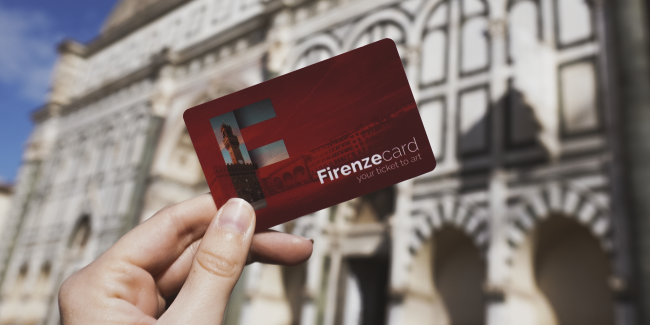
Admission tickets and reservations for the museums and churches included in this itinerary are covered by the Firenzecard.
Day 1 in Florence: Uffizi Gallery, Palazzo Vecchio Museum and Basilica of Santa Croce
The first day of the itinerary is dedicated to Florence's historic centre and some of its most famous monuments and museums:
- Uffizi Gallery
- Palazzo Vecchio Museum
- Basilica of Santa Croce
Total walking time: approximately 10–12 minutes
Level: Easy, through the historic centre
Total distance: approximately 1 km
1. Uffizi Gallery
One of the most important museums in Europe and the world, the Uffizi Gallery is renowned for its extraordinary collection of paintings. It houses works by some of the greatest artists in art history, including Botticelli, Leonardo da Vinci, Michelangelo, Raphael and Caravaggio.
Among its most famous masterpieces are Botticelli's The Birth of Venus and Primavera, as well as Michelangelo's Doni Tondo.
The gallery also houses important collections of German, Dutch and Flemish paintings, featuring works by Dürer, Rembrandt and Rubens, as well as paintings by Goya.
The museum's collection is further enriched by the Medici collection of ancient sculptures and busts, the Prints and Drawings Department and the collection of self-portraits.
Visiting the Uffizi Gallery means embarking on a journey through the history of Italian and European painting, admiring some of the most important masterpieces in the world's artistic heritage.
Visiting time: 2- 3 h
Price without the Firenzecard: 29,00 €
2. Palazzo Vecchio Museum
Palazzo Vecchio is one of Florence's most iconic buildings. For centuries, it was the centre of the city's political power, and today it houses Florence's City Hall.
Here you can admire:
- The Hall of the Five Hundred (Salone dei Cinquecento). This is the most spectacular room in the palace. Majestic and impressive, it is decorated with frescoes by Giorgio Vasari celebrating the achievements of Florence and Cosimo I de' Medici, as well as an intricately decorated coffered ceiling. The statues displayed in the hall are particularly important because they celebrate Florence's power and its historical figures: The Genius of Victory by Michelangelo, that is one of the hall's most famous works, symbolising triumph and strength; Florence Triumphing over Pisa by Giambologna, that was conceived as a complementary work to Michelangelo's Genius of Victory; The Labours of Hercules by Vincenzo de' Rossi, that depicts the mythological feats of Hercules, symbolising strength, courage and virtue.
- The Hall of Lilies (Sala dei Gigli). One of the most beautiful rooms in the palace, featuring blue and gold decorations and Domenico Ghirlandaio's famous fresco depicting Saint Zenobius.
- The Hall of Geographical Maps (Sala delle Carte Geografiche). A fascinating room featuring large maps painted on the walls and an enormous globe, offering an insight into how the known world was represented in the sixteenth century.
- Eleonora's Chapel (Cappella di Eleonora). A small private chapel decorated by Bronzino with magnificent frescoes, including scenes from the life of Moses. It is a true artistic gem.
- The Hall of the Two Hundred (Sala dei Duecento). Historically used for meetings of the Council of Two Hundred, this room is important for understanding the political organisation of medieval and Renaissance Florence.
Visiting time: 2 h
Price without the Firenzecard: 18,00 €
3. Basilica of Santa Croce
The Basilica of Santa Croce is an absolute must-see. It is one of the city's most important landmarks from an artistic, historical and religious perspective, representing the historical, artistic and cultural heritage of Florence and Italy.
It is known as the Temple of the Italian Glories because it houses the tombs and funerary monuments of some of Italy's greatest cultural figures, including Michelangelo, Galileo Galilei, Niccolò Machiavelli and Dante, to name just a few. It also preserves works by extraordinary artists such as Giotto, Donatello and Brunelleschi.
Inside the basilica, particularly in the Bardi and Peruzzi Chapels, you will find magnificent fresco cycles by Giotto, dedicated to the life of Saint Francis and the Apostles.
These frescoes are fundamental works for understanding the birth of modern painting, as they show how Giotto introduced greater realism, expressiveness and depth into artistic compositions.
You can also admire the magnificent Pazzi Chapel, designed by Filippo Brunelleschi. It is one of the finest examples of Renaissance architecture, characterised by harmonious geometry, perfect proportions and understated decoration.
Visiting time: 1.5 - 2 h
Price without the Firenzecard: 10,00 €
Day 2 in Florence: Accademia Gallery, Bargello National Museum and Santa Maria Novella Complex
The second day continues the discovery of Florence's great artistic masterpieces with an itinerary combining Renaissance sculpture, history and religious architecture:
- Accademia Gallery
- Bargello National Museum
- Santa Maria Novella Complex
Total walking time: approximately 25 minutes
Level: Easy, through the historic centre
Total distance: approximately 2.1 km
1. Accademia Gallery
The Accademia Gallery is world-famous thanks to Michelangelo's David and its outstanding collection of sculptures by the artist, brought together here at different times. These include the Prisoners and the unfinished Saint Matthew, which together form a kind of mausoleum dedicated to Michelangelo.
However, the gallery also boasts one of the world's most important collections of early Italian paintings.
Its gold-ground paintings, in particular, dating from the thirteenth to the early fifteenth century, tell the story of the extraordinary flourishing of art during this period. The collection includes works by some of the greatest Florentine artists of the time, such as Giotto, Bernardo Daddi, Taddeo Gaddi, Andrea Orcagna and Nardo di Cione.
The Hall of the Colossus is dominated by Giambologna's model of The Rape of the Sabine Women. It is one of the rare sixteenth-century full-scale models made in raw clay for the marble version sculpted in 1582, which can be admired beneath the Loggia dei Lanzi in Piazza della Signoria.
You can also admire an extraordinary collection of musical instruments from the private collections of the Grand Dukes of Tuscany, the Medici and the Lorraine families. These instruments were collected between the second half of the seventeenth century and the first half of the nineteenth century.
Highlights include a tenor viola and a cello by Antonio Stradivari, a Stradivarius violin dating from 1716 and a cello by Niccolò Amati dating from 1650.
Visiting time: 1 - 1.5 h
Price without the Firenzecard: 24,00 €
2. Bargello National Museum
A true gem for sculpture lovers, the Bargello brings together works by Donatello, Michelangelo and Cellini under one roof.
Among the masterpieces you can admire:
- Donatello's David. One of the museum's most important masterpieces, it depicts the young David after defeating Goliath. It is famous for being one of the first great freestanding nude sculptures of the Renaissance.
- Michelangelo's Bacchus. An early sculpture by Michelangelo that reveals a different side of the artist from the one we know through the Pietà and David.
- Donatello's Saint George. An elegant and proud figure, an extraordinary example of Donatello's ability to bring life and personality to his sculptures.
- Verrocchio's David. Another depiction of David, very different from Donatello's version: younger, more refined and with an almost elegant, aristocratic bearing.
- Michelangelo's Bust of Brutus. An intensely expressive marble portrait that conveys strength and character. It is one of the most interesting examples of Michelangelo's non-religious work.
- Donatello's Marzocco. The lion symbolising Florence, depicted alongside the city's coat of arms. A particularly significant work for understanding the city's history and identity.
Visiting time: 1 - 1.5 h
Price without the Firenzecard: 15,00 €
3. Santa Maria Novella Complex
The final stop of the day is the Santa Maria Novella Complex, one of the city's most important religious and artistic landmarks.
The magnificent Renaissance façade by Leon Battista Alberti leads into an environment filled with artistic treasures. Inside the basilica, you can admire masterpieces such as Masaccio's Holy Trinity, Ghirlandaio's frescoes in the Tornabuoni Chapel and numerous other works of art that tell the story of centuries of Florentine history.
Don't miss the Green Cloister and the Spanish Chapel, both famous for their extraordinary fresco cycles. I recommend taking your time to explore them, as they preserve remarkable examples of fourteenth-century Florentine painting and early Renaissance art.
The Green Cloister (Chiostro Verde) takes its name from the predominant green colour of the frescoes that once decorated its walls. These were created using the terra verde technique, which employs a green earth pigment commonly used in mural painting.
Its most distinctive feature is the fresco cycle dedicated to the Stories of Genesis, painted during the first half of the fifteenth century by artists including Paolo Uccello, one of the leading figures of Florentine Renaissance painting.
The Spanish Chapel (Cappellone degli Spagnoli) is one of the most spectacular spaces in the complex.
Originally, it served as the chapter house of the Dominican convent, where the friars gathered to discuss religious matters, make important decisions and listen to spiritual readings.
Its current name dates from a later period: in 1566, the room was granted to the Spanish community living in Florence, which had arrived in the city in the entourage of Eleonora of Toledo, wife of Cosimo I de' Medici.
The entire room is covered with an elaborate cycle of frescoes, which serves not merely a decorative purpose but also conveys a specific religious and cultural message: celebrating the mission of the Dominican Order and the triumph of the Catholic Church over heresy.
The frescoes can be read as a large illustrated book. Through images, symbols and figures, they tell the story of the Dominican mission and highlight the importance of learning, preaching and defending the faith.
This visit offers a wonderful opportunity to understand how art also served as a tool for teaching, communication and the transmission of faith.
Visiting time: 1.5–2 h
Price without the Firenzecard: 10,00 €